George Washington Palmer’s sister, Nantie, married
Francis (Frank) Marion Imboden.
Frank was the brother of
Confederate General John Daniel Imboden, who figured
large in the development of the coal industry in Wise
and Lee Counties, Virginia, and then developed the
“Virginia Creeper” Railroad from his company town at
Damascus.
George Palmer brought Frank to work
for him in Saltville.
Frank had responsibility for the development of
the proposed Norfolk and Cincinnati Railroad in 1882.
It was to start at Wytheville, where it could
serve the Lead Mines, and Zinc Mines at Austinville, and
to join the Norfolk and Western Railroad near Abingdon
after having passed through Saltville.
The Imbodens and Palmers were involved with the
bankrupt iron and steel businesses in Bristol, which in
the Twentieth Century had become Bristol Steel.
Frank, who died in 1929, and his wife likely were
still in Bristol when they died, as they are buried in
the East Hill Cemetery there.
W. A. Stuart must have been sliding
into poor health, because in 1891 Palmer obtained a
promissory note from the Wytheville Bank with which to
buy Stuart out.
Stuart died in 1892 and is buried in the
Elizabeth Cemetery, and the sale was finalized in 1893.
George Washington Palmer died in 1904, and is
buried in the Emory and Henry Cemetery next to the
Confederate dead and the Black homicide victims of the
Battle of Saltville.
That omnipresent “group of northern
capitalists” that had always been associated with Palmer
and his Saltville endeavors bought out all his interests
in 1892 and began the conversion of the Salt Works into
a modern chemical plant under the name of Mathieson
Alkali Works.
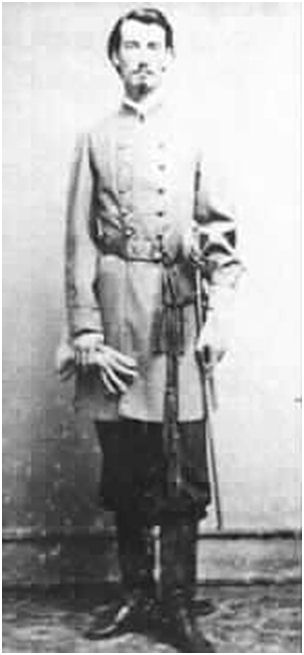
Francis (Frank) Marion Imboden
