Table salt is sodium chloride, limestone is
calcium carbonate, and water is hydrogen oxide.
The first chemical process Mathieson used
in its chemical factory at Saltville simply
switched the partners around in these two
compounds by a two part chemical process.
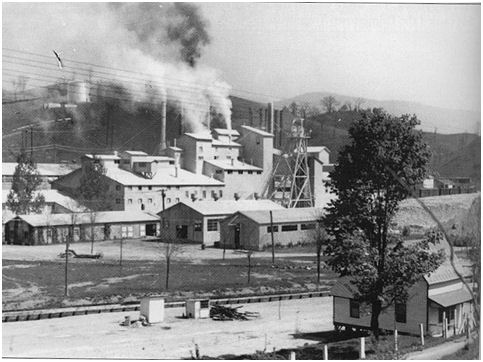
United States Gypsum of Plasterco
In a chemical process called ‘the Solvay Process’ sodium
chloride and calcium carbonate are changed into sodium
carbonate and calcium chloride.
Limestone was quarried in
Walker’s Mountain to the south of town, and was brought
in by ore buckets carried on a high cable system.
Then carbon dioxide from
the air and ammonia can be added and sodium bicarbonate
(baking soda) was made.
In the second type of manufacturing process limestone
was mixed with salt water, which was pumped from wells.
The resulting chemical reaction is called the
‘chloralkali process’ (Castner-Kellner Process).
An electric current is run through salt water,
and the result is hydrogen gas, chlorine gas, and sodium
hydroxide (lye).
Mercury is required to make this process work.
It is not consumed, but leaks out of the
machinery in the process of manufacture.
The machine unit used in this process is called a
‘mercury cell’.
In the early years the commercially useful end
products of these processes were sodium carbonate,
also known as ‘soda ash’, which is used in glass
manufacture; sodium bicarbonate, which is baking
soda and which was sold under
... Continue
to PAGE 54
