|
In 1817 coal was first used to evaporate salt at the Kanawha
Salt Works.
It
rapidly resolved the bottleneck that the use of wood caused.
By 1846 the Kanawha Salt Company was making 3,224,786
bushels a year.
There was one problem with the salt made at the Kanawha site.
The salt was tainted by compounds of iron, which gave it
a brown color and a slightly bitter taste.
It was a very distinctive attribute, and the salt from
this location was known far and wide as ‘Kanawha Brown (or
‘Red’) Salt’.
However, most of the per capita salt usage was not in cooking,
but in other uses such as leather tanning, mixing the chinking
mud used to fill the space between the logs in a log cabin, and
for live stock usage.
And for the cost differential, many people chose to put
up with a little bitterness in their table salt.
In 1846 Sarah Buchanan Campbell Preston died, and willed her
estates to her three sons.
The sod had not settled over her grave at Aspenvale when
her sons in 1847 began trying to turn their interests in the
Saltville operations into cash.
None of them seemed to have been interested in actual
management of the business.
By 1858 they were bankrupt.
George Palmer and William Alexander Stuart began to try
to buy up the different fragments of ownership. * The issue
wound up in court, and 1873 saw it in the Circuit Court of the
United Stated for the Western District of Virginia.
This decision was appealed to the Federal Supreme Court
in 1877.
A significant
reality that determined the result of this suite was that the
Preston family had been too derelict to register some legal
documents.
Thus ended the
era that had begun a century and a quarter earlier when Maj.
Charles Campbell committed his share in the Patton Loyal Company
expedition into Campbell’s Choice.
* Spencer, Ackerman & Co. leased the salt
works in 1858, and sold out to Stuart, Palmer, and George Parker
in 1862.
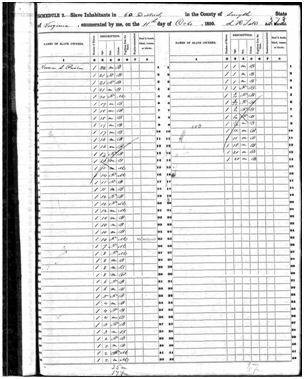
1850 List of Thomas Preston's 56 Slaves Used at the Salt Works
...
Continue
to SALTVILLE IN THE CIVIL WAR
30

Return to Big Stone Gap Publishing.com
Copyright © 2014 Lawrence J. Fleenor, Jr.
All Rights Reserved
|